The Allure of the Jack-in-the-Pulpit
The Jack-in-the-Pulpit (Arisaema triphyllum) is a plant that captivates the imagination. Its unique spathe and spadix, resembling a preacher in a pulpit, make it a standout in any woodland garden. While many gardeners enjoy its ephemeral beauty, dedicated horticulturists often seek to expand their collections or share this botanical marvel with others. This is where advanced propagation techniques come into play, moving beyond simple division to explore the more nuanced and rewarding methods of multiplying these fascinating plants.
This article delves into the sophisticated strategies for propagating Jack-in-the-Pulpit, catering to gardeners who are comfortable with a bit more complexity and are eager to achieve higher success rates and larger numbers of new plants. We will explore methods that leverage the plant’s life cycle, its unique reproductive structures, and even its genetic material.
Understanding Jack-in-the-Pulpit Biology for Propagation Success
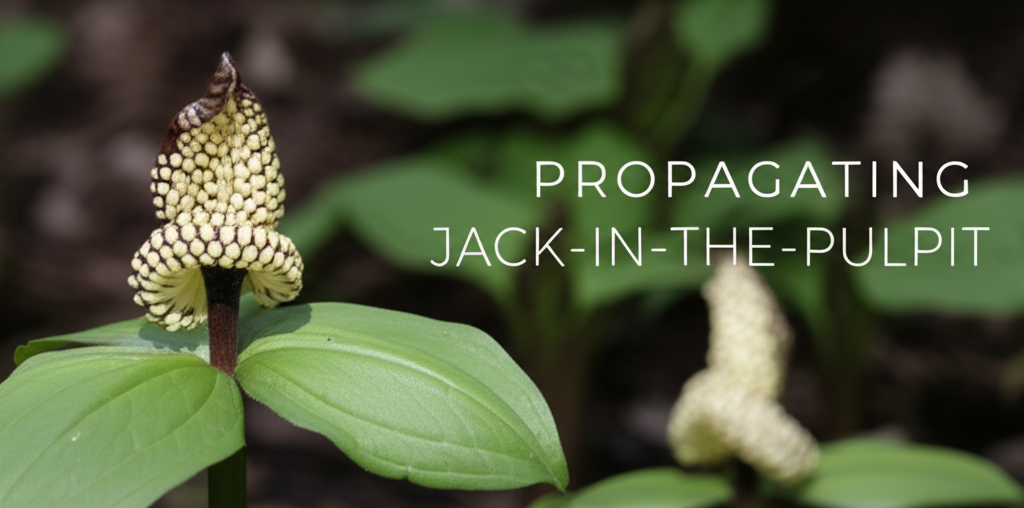
Before embarking on advanced propagation, a foundational understanding of the Jack-in-the-Pulpit’s biology is crucial. These plants are perennials that grow from a corm, a swollen underground stem. Their life cycle is marked by distinct stages, and understanding these helps in timing and executing propagation efforts effectively.
The Corm: The Heart of the Plant
The corm is the primary storage organ and the source of vegetative growth. Mature plants typically produce one or more corms, which can be a target for propagation through division. However, the corm also plays a vital role in the plant’s reproductive strategy.
Reproductive Strategies: Flowers, Seeds, and Vegetative Offsets
Jack-in-the-Pulpit exhibits a fascinating sexual plasticity, meaning an individual plant can change its sex over its lifetime. This influences its reproductive capacity.
- Flowering: Typically, smaller, immature plants are female or sterile. As they grow larger and accumulate resources, they can develop into male plants. The largest and most robust plants are often capable of flowering as females, producing a cluster of spathes.
- Seed Production: Successful pollination of female flowers results in bright red berries, which ripen in late summer and fall. These berries contain seeds and are a significant source of new plants, albeit with a longer germination period.
- Vegetative Offsets (Bulblets): Mature corms can produce small bulblets at their base. These offsets are genetically identical to the parent plant and offer a faster route to new individuals compared to seeds.
Key Facts and Comparison of Propagation Methods
To guide your choice of propagation technique, consider the following overview.
| Method | Starting Material | Ease of Execution | Time to Maturity | Genetic Identity | Typical Yield |
|---|---|---|---|---|---|
| Corm Division | Mature Corms | Moderate | 2-4 years | Identical to parent | 1-3 new plants per division |
| Seed Propagation | Ripe Berries/Seeds | Challenging (requires stratification) | 3-7+ years | Variable (sexual recombination) | Potentially hundreds |
| Bulblet Separation | Small offsets from corm | Easy to Moderate | 2-3 years | Identical to parent | Multiple bulblets per corm |
| Tissue Culture (Advanced) | Meristematic tissue (leaf bud, corm tissue) | Very Challenging (requires sterile lab conditions) | 1-2 years (accelerated) | Identical to parent (with potential for mutations) | Potentially thousands |
Advanced Propagation Techniques Explored
While corm division and seed sowing are common, advanced gardeners can employ more intricate methods to achieve greater success and scale their propagation efforts.
1. Strategic Corm Division for Maximum Viability
Corm division is a straightforward method, but advanced techniques focus on optimizing the timing, the division process itself, and the aftercare to ensure the highest survival rate and vigor of the new plants.
Timing is Everything
The ideal time for corm division is during the plant’s dormant period. This is typically in late fall after the foliage has died back completely, or very early spring before new growth emerges.
- Fall Division: Allows corms to establish in their new locations before winter, promoting root development.
- Spring Division: Can be done if fall division was missed, but requires careful handling to avoid damaging emerging shoots.
The Division Process: Precision is Key
Mature corms will often have multiple “eyes” or buds from which new shoots will emerge. The goal is to divide the corm in a way that ensures each division has at least one viable eye and sufficient stored energy.
- Selection: Choose healthy, firm corms. Avoid any that show signs of rot or damage.
- Cleaning: Gently brush away soil.
- Division: Use a sharp, sterilized knife or trowel. For larger corms, you can often see natural division points. Aim to cut through the corm, ensuring each piece has an eye. If the corm is large and compact, you might need to make cuts carefully to separate sections.
- Treating Cuts: After dividing, it is beneficial to let the cut surfaces air dry for a few hours to a day. This helps form a protective callus and reduces the risk of fungal infection. Some gardeners also apply a fungicide or sulfur powder to the cut surfaces for added protection.
- Replanting: Replant divisions immediately after they have callused. Plant them at a depth similar to how they were previously growing, typically 2-4 inches deep, with the eye facing upwards.
2. Harnessing the Power of Seeds: Stratification and Scarification Secrets
Seed propagation from the striking red berries offers a chance to generate a large number of plants, but it’s a process that requires patience and understanding of the seed’s dormancy requirements.
Seed Collection and Preparation
- Timing: Collect berries when they are fully ripe and bright red, usually in late summer to early fall.
- Extraction: Gently squeeze the berries to extract the seeds. Wash the seeds thoroughly to remove all pulp, as the pulp can inhibit germination.
- Drying: Allow the seeds to air dry for a few days in a cool, well-ventilated area. Do not dry them to the point of cracking.
The Crucial Step: Stratification
Jack-in-the-Pulpit seeds have complex dormancy requirements that necessitate a period of cold, moist stratification. This mimics the natural conditions of overwintering.
- Cold Stratification:
1. Mix the seeds with a sterile medium like peat moss, vermiculite, or damp sand.
2. Place the mixture in a sealed plastic bag or container.
3. Label clearly with the date and seed type.
4. Store in the refrigerator (around 35-40°F or 1-4°C) for a minimum of 3-4 months. Check periodically for mold and ensure the medium remains moist but not waterlogged.
- Warm Stratification (Optional but beneficial for some species): Some sources suggest an initial period of warm stratification (around 68-75°F or 20-24°C) for a few weeks before the cold stratification. This can further break dormancy.
Sowing and Germination
- Sowing Medium: Use a well-draining seed-starting mix.
- Sowing: Sow seeds thinly on the surface of the medium or barely cover them.
- Environment: After stratification, place the sown seeds in a cool location (50-60°F or 10-15°C). Mimic woodland conditions with dappled light.
- Patience is a Virtue: Germination can be erratic and may take several months, or even up to a year or two. Do not give up if you don’t see immediate results. Some seeds may germinate one season, while others the next.
Scarification: Breaking Tough Seed Coats
For some Arisaema species, the seed coat can be particularly tough, hindering water uptake. Gentle scarification can be employed.
- Mechanical Scarification: Carefully nick the seed coat with a sharp needle or a very fine grit sandpaper. Be cautious not to damage the embryo inside.
- Chemical Scarification: Soaking seeds in a dilute sulfuric acid solution for a short period can be effective for some species, but this method carries significant risks and is best avoided by most home gardeners unless thoroughly researched and performed with extreme caution.
3. Bulblet Separation: A Faster Vegetative Route
Jack-in-the-Pulpit corms can produce small offsets or bulblets at their base. These are essentially miniature corms and can be separated to grow into new plants.
Identifying and Separating Bulblets
- During Corm Division: When dividing a mature corm, you will often find small bulblets attached. Gently twist or cut these away from the parent corm.
- From Existing Plants: In late fall or early spring, carefully excavate around a mature corm. You may discover bulblets that have formed.
- Handling: Treat bulblets with care. Ensure each has a small basal plate where roots will form.
Planting Bulblets for Growth
- Planting Depth: Plant bulblets shallowly, about 1-2 inches deep, with the pointed end (where the shoot will emerge) facing upwards.
- Soil: Use a well-draining, moist soil mix.
- Patience: Bulblets are essentially young plants. They will take 2-3 years to mature enough to flower, but they establish faster than seedlings.
4. Tissue Culture: The Ultimate Frontier for Advanced Propagators
For the truly dedicated and technically inclined gardener, tissue culture offers the most rapid and efficient method for multiplying Jack-in-the-Pulpit. This involves growing plant cells, tissues, or organs in a sterile laboratory environment on a nutrient medium.
Key Concepts in Tissue Culture
- Sterility: The absolute cornerstone of tissue culture. All tools, media, and explants must be sterile to prevent contamination by bacteria and fungi. This often requires specialized equipment like a laminar flow hood and autoclaves.
- Explants: Small pieces of plant tissue (e.g., leaf bud meristems, small sections of corm tissue) are used to initiate cultures.
- Culture Media: A carefully balanced mixture of macronutrients, micronutrients, vitamins, amino acids, and plant hormones (auxins and cytokinins) designed to stimulate cell division, differentiation, and growth.
- Regeneration: The process by which the cultured tissue develops into a whole plantlet.
General Steps (Highly Simplified):
- Explant Preparation: Sterilize explant material and cut into small pieces.
- Initiation: Place explants onto a suitable initiation medium to encourage callus formation or direct organogenesis.
- Multiplication: Transfer proliferating tissues to a multiplication medium, often with higher cytokinin levels, to promote the development of shoots.
- Rooting: Transfer developing shoots to a rooting medium, typically with higher auxin levels, to stimulate root formation.
- Acclimatization: Gradually transition plantlets from the sterile, humid environment of the lab to the conditions of a greenhouse or outdoor nursery. This is a critical and often challenging phase.
Why Tissue Culture is Advanced:
- Requires specialized knowledge of plant physiology and sterile techniques.
- Demands investment in laboratory equipment.
- High potential for contamination, leading to culture loss.
- Hormone levels and media composition need careful optimization for each species and even ecotype.
While not for the faint of heart, successful tissue culture can yield hundreds or thousands of genetically identical plants from a single parent in a relatively short period.
Troubleshooting Common Propagation Challenges
Even with advanced techniques, issues can arise. Being prepared to troubleshoot is part of advanced gardening.
Fungal and Bacterial Infections
- Symptoms: Rotting corms, mushy seedlings, slime on explants.
- Prevention: Use sterile tools and media. Ensure good air circulation. Avoid overwatering. Treat cut surfaces after division.
- Remedies: Remove infected material immediately. Sterilize tools. For tissue culture, discard contaminated cultures.
Low Germination Rates (Seeds)
- Causes: Improper stratification, non-viable seeds, tough seed coats.
- Solutions: Ensure correct stratification duration and temperature. Try scarification for recalcitrant seeds. Collect seeds from healthy, mature plants.
Poor Corm Development
- Causes: Insufficient light, poor soil drainage, lack of nutrients.
- Solutions: Ensure adequate but not direct sun exposure in their native woodland habitat. Improve soil drainage. Provide appropriate fertilization during the growing season.
Slow Growth from Seedlings/Bulblets
- Cause: Jack-in-the-Pulpit is inherently slow-growing, especially from seed.
- Expectation Management: Understand that it takes several years for seedlings to reach flowering size. Provide optimal growing conditions to encourage steady growth.
Pros and Cons of Advanced Propagation Methods
Here’s a summary of the advantages and disadvantages of the more involved propagation techniques.
| Method | Pros | Cons |
|---|---|---|
| Strategic Corm Division | Faster than seeds, high success rate, genetically identical plants. | Limited by the number of mature corms available, can stress parent plant if not done carefully. |
| Seed Propagation | Potential for large numbers of plants, genetic diversity, rewarding long-term project. | Very slow to maturity, requires specific stratification techniques, variable germination. |
| Bulblet Separation | Faster than seeds, genetically identical, easy to separate. | Requires mature corms with bulblets, plants still need a few years to mature. |
| Tissue Culture | Extremely rapid multiplication, can produce large numbers of plants from minimal material, potential for disease-free plants. | Highly technical, requires sterile lab conditions and equipment, high risk of contamination, can be expensive. |
Conclusion: The Rewarding Journey of Propagating Jack-in-the-Pulpit
Embarking on advanced propagation techniques for Jack-in-the-Pulpit is a journey for the patient and persistent gardener. Whether you choose the meticulous precision of corm division, the long-term reward of seed cultivation, or the cutting-edge frontier of tissue culture, the process offers a deep connection with this extraordinary plant. By understanding its biology and mastering these techniques, you can not only expand your own appreciation for the Jack-in-the-Pulpit but also contribute to its preservation and share its unique charm with fellow enthusiasts. The satisfaction of nurturing a new generation of these woodland wonders from your own efforts is a reward that few gardening endeavors can match.